The best connector types for industrial applications include circular connectors, M8 and M12 connectors, industrial RJ45 connectors, D-Sub connectors, and RF connectors. Each serves a distinct role in maintaining reliable power, data, and signal transmission in demanding environments.
Industrial equipment faces constant exposure to vibration, contaminants, temperature swings, and continuous operation. Choosing the right connector helps maintain performance, reduce maintenance concerns, and support long-term system reliability.
Industrial Connector Requirements Explained
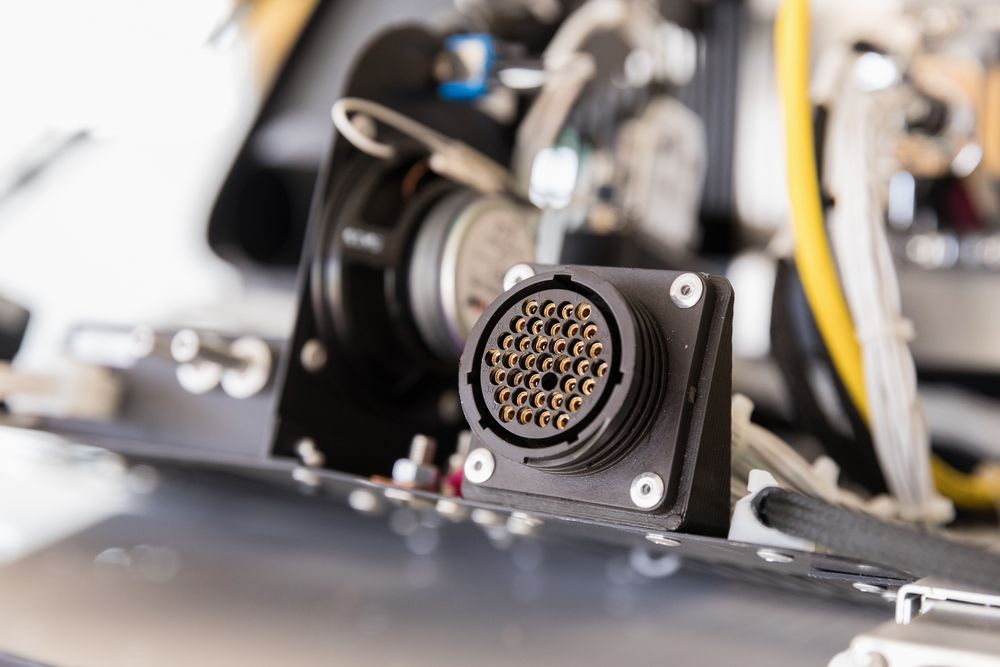
Industrial environments place unique demands on electrical connections. Connectors must maintain reliable performance despite vibration, moisture, dust, chemicals, temperature fluctuations, and repeated mating cycles. The right connection strategy depends on more than electrical compatibility alone. Mechanical strength, ingress protection ratings, shielding effectiveness, and long-term durability all influence system performance.
Engineers often balance multiple priorities during connector selection. High-speed data networks depend on strong signal integrity, while power applications may prioritize current-carrying capacity and environmental resistance. In aerospace, medical, industrial automation, and heavy equipment applications, connector failures can result in downtime, troubleshooting efforts, and maintenance challenges. Understanding these requirements creates a stronger foundation for selecting components that align with application goals and operational expectations throughout the life of the system. Careful evaluation early in the design process can also reduce integration issues and simplify long-term maintenance planning.
Why Circular Connectors Remain Popular
Among the many connection options available to engineers, circular connectors remain a common choice across industrial equipment, transportation systems, aerospace platforms, and medical devices. Their compact design, secure locking mechanisms, and strong environmental sealing make them well-suited for applications exposed to vibration, moisture, and contaminants.
Many designs also utilize
circular metric connectors, which follow internationally recognized sizing conventions that simplify integration across equipment and suppliers. Depending on the application, these connectors can carry power, signals, or data while maintaining dependable performance in challenging operating conditions. Their versatility allows engineers to standardize connection strategies across multiple systems, reducing complexity during installation, maintenance, and future upgrades. This combination of durability and flexibility has helped sustain their popularity for decades across both legacy equipment and new product development programs.
M8 and M12 Connectors for Automation
Automation systems often rely on compact, rugged connection solutions that can withstand constant motion and demanding operating conditions. Both M8 circular connectors and M12 circular connectors are widely used in sensors, actuators, control devices, and industrial communication networks because they combine durability with a space-efficient design.
When comparing
M8 vs. M12 connectors, the primary differences involve size, pin count, and application requirements. M8 connectors are commonly selected for smaller sensors and devices where installation space is limited. M12 connectors typically support larger devices, higher pin counts, and industrial networking protocols. Both options feature secure threaded coupling mechanisms that resist vibration and accidental disconnection. As automation equipment becomes more interconnected, these connectors continue to play an important role in maintaining reliable communication and power distribution throughout industrial systems.
Industrial RJ45 Connectors for Ethernet
Ethernet has become a foundational technology in modern industrial automation, connecting controllers, sensors, HMIs, and networked equipment across the factory floor. While traditional RJ45 connectors are common in commercial environments, industrial versions are engineered to withstand harsher operating conditions and maintain reliable network performance.
Key advantages include:
- Enhanced environmental protection through sealed housings that resist dust, moisture, and contaminants.
- Improved shielding to reduce electromagnetic interference in electrically noisy environments.
- Secure locking mechanisms that help prevent accidental disconnections caused by vibration.
- Reliable data transmission for industrial Ethernet protocols used in automation and control systems.
As manufacturers continue to expand connected operations, industrial RJ45 connectors remain a practical choice for maintaining stable communications between equipment, control networks, and data collection systems. Their widespread adoption also simplifies integration across diverse equipment platforms and network architectures.
D-Sub Connectors in Industrial Systems
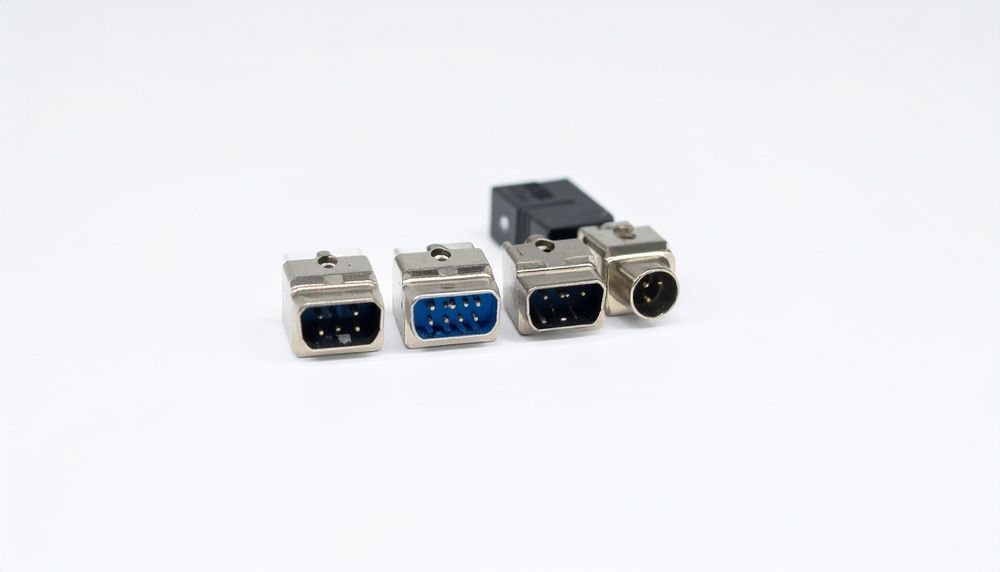
Despite the growth of newer connection technologies, D-Sub connectors continue to serve an important role in many industrial applications. Their rugged construction, established industry acceptance, and broad range of configurations have helped them remain a dependable option for control systems, instrumentation, communication equipment, and legacy infrastructure.
D-Sub connectors are often selected because they offer:
- Multiple contact arrangements that accommodate varying signal and power requirements.
- Secure mechanical connections through screw-locking hardware that resists vibration.
- Proven long-term reliability in industrial and transportation environments.
- Compatibility with existing equipment, where redesigning an entire interface may not be practical.
For many engineers, D-Sub connectors represent a balanced combination of durability, flexibility, and familiarity. Their continued use across industrial systems demonstrates the value of connection solutions that perform consistently across decades of operation and equipment evolution.
RF Connectors for Industrial Networks
As industrial systems become increasingly connected, wireless communication plays a larger role in monitoring, control, asset tracking, and remote data collection. RF connectors help maintain signal quality between antennas, radios, sensors, and networking equipment operating in demanding environments. Selecting the right RF interface can have a significant impact on communication reliability, particularly in applications where consistent data transmission is necessary for operational visibility and control.
When evaluating
high-performance RF connectors, engineers often consider frequency range, shielding effectiveness, environmental resistance, and mechanical durability. These factors influence how well a connector maintains signal integrity in the presence of vibration, temperature fluctuations, and electromagnetic interference. From industrial IoT deployments to aerospace communication systems, RF connectors help maintain dependable wireless connectivity while supporting long-term network performance across diverse operating environments, including remote installations and mission-focused industrial applications.
Choosing the Right Industrial Connector
Selecting the right connector types starts with a clear understanding of the application environment, performance requirements, and long-term reliability goals. Factors such as exposure to moisture, vibration, temperature extremes, data transmission needs, and available installation space all influence the selection process. A connector that performs well in one application may not be the best fit for another, making early evaluation an important part of system design.
For OEMs operating in medical, aerospace, industrial automation, and heavy equipment markets, connector selection often involves balancing technical requirements with manufacturing considerations.
EI Sales helps customers navigate these decisions by providing solutions through both catalog components and custom-engineered options. If your team is evaluating connection strategies for a new design or production program,
contact EI Sales today to learn more and expect solutions.