Temperature measurement often sits in the background of complex systems, yet small differences in sensor behavior can shape performance in meaningful ways. Engineers are often balancing tight tolerances against harsh operating conditions, where a single component choice can shift outcomes over time. That tension between precision and durability leads to a familiar question with no universal answer. Clarity comes from aligning sensor characteristics with real-world application needs, not just specifications on a datasheet.
Why Temperature Sensor Selection Matters
Temperature sensing decisions often carry long-term implications that extend beyond initial design. In many of the industries we serve, including medical devices, aerospace systems, and industrial automation, temperature data influences control loops, safety thresholds, and overall system stability. A mismatch between sensor type and application conditions can introduce drift, slow response, or measurement gaps that compound over time.
Engineers are selecting components that influence how a system interprets and reacts to its environment under real operating conditions. Factors such as thermal cycling, physical placement, and electrical noise all interact with sensor behavior in subtle ways. Thoughtful selection early in the process helps maintain measurement integrity and supports consistent performance as designs move from prototype through production, reducing redesign cycles and avoiding costly downstream validation challenges while maintaining consistency across varying operational loads and environmental conditions, even under extended deployment durations.
Thermistors for Precision Temperature Control
Thermistors are widely selected in applications where tight temperature control and sensitivity are priorities. Their resistance changes predictably with temperature, allowing for highly accurate readings within a defined range. This makes them well-suited for medical instrumentation, battery management systems, and precision industrial controls where small variations matter.
Performance consistency often depends on material quality and construction, which is why sourcing from
trusted manufacturers plays a meaningful role in long-term reliability. Even slight variations in composition can influence tolerance and stability over time. Thermistors also tend to respond quickly to temperature changes due to their small size, making them effective in environments where rapid feedback is needed.
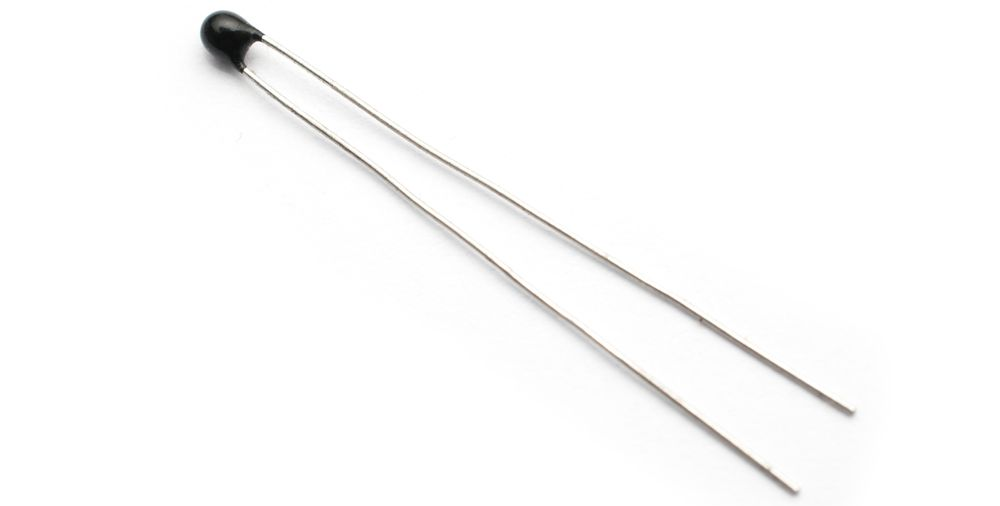
Their limitations appear at higher temperature ranges, where nonlinearity increases. Still, within controlled environments, thermistors remain a dependable choice for precise measurement and repeatable performance across tightly regulated operating conditions and sensitive electronic assemblies.
Thermocouples for Extreme Temperature Ranges
Thermocouples are designed for environments where temperature conditions extend far beyond the limits of most sensing technologies. Built from two dissimilar metals joined at a junction, they generate a voltage proportional to temperature changes. This structure allows them to operate reliably across a broad range, from sub-zero conditions to extreme heat found in aerospace systems, heavy equipment, and industrial processing.
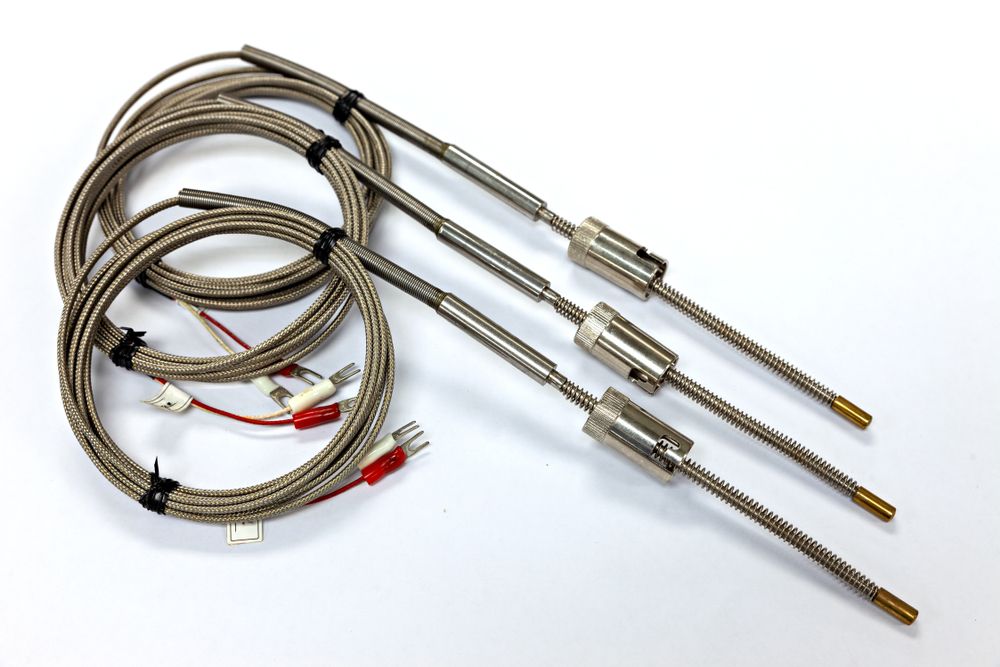
Their durability makes them well-suited for applications involving vibration, pressure, or rapid thermal cycling. Response times are typically fast, especially in exposed junction designs, which is valuable in systems that depend on immediate feedback. However, thermocouples generally sacrifice some accuracy compared to thermistors, particularly in lower temperature ranges.
Because of these characteristics, thermocouples are often selected when environmental resilience and measurement range take precedence over fine resolution, especially in applications where long-term exposure to harsh conditions is unavoidable.
Comparing Accuracy, Range, and Response Time
A side-by-side comparison helps clarify how each sensor behaves under different operating conditions. While both serve temperature measurement needs, their performance profiles differ in meaningful ways, especially when evaluating thermistor vs thermocouple tradeoffs across precision and durability.
| Characteristic | Thermistor | Thermocouple |
|---|---|---|
| Accuracy | High within a limited range | Moderate across a wide range |
| Temperature Range | Narrow to moderate | Very wide, including extreme heat |
| Response Time | Fast due to small mass | Fast, especially exposed junction |
| Stability | Strong in controlled environments | Strong in harsh, fluctuating systems |
Thermistors excel in applications where precision is closely monitored, while thermocouples remain stable across broader and more demanding conditions. Selecting between them often comes down to how much variation a system can tolerate, and the environmental factors influencing measurement performance over time, including exposure to contaminants, mechanical stress, calibration intervals, and system-level integration constraints that affect long-term reliability, as well as installation methods, wiring considerations, and signal conditioning requirements within the overall design.
Matching Sensor Type to Application Needs
Selecting between sensor types becomes clearer when mapped directly to application conditions and system priorities. A structured approach helps align performance characteristics with real-world use, especially when evaluating thermistor vs thermocouple decisions across multiple environments.
Common Application Alignment:
Medical devices and lab equipment:
Thermistors for tight tolerance and stable environments
Industrial automation systems:
Thermistors for controlled processes, thermocouples for variable conditions
Aerospace and heavy equipment:
Thermocouples for high heat and mechanical stress
Battery and power management:
Thermistors for fast, localized temperature tracking
Component availability and consistency also factor into the decision. Working with authorized distributors helps maintain continuity across prototypes and production builds, especially when sourcing components with specific tolerances or certifications.
By aligning sensor behavior with environmental exposure, system response expectations, and sourcing strategy, engineers can move forward with greater confidence in both performance and long-term reliability, while also reducing supply chain variability and minimizing risks associated with component substitution or redesign.
Design Considerations for Sensor Integration
Sensor selection does not end with performance specifications. Integration into the broader system introduces additional variables that influence measurement consistency and long-term function. Electrical interface requirements, mounting methods, and environmental exposure all shape how effectively a sensor performs once deployed.
Key Integration Factors:
- Placement and thermal coupling: Direct contact versus ambient sensing impacts accuracy
- Signal conditioning: Amplification and filtering may be needed, especially for low-voltage outputs
- Mechanical protection: Encapsulation or housings help manage moisture, vibration, and contaminants
- Wiring and connectivity: Lead length and routing can introduce noise or signal degradation
Design teams often account for these factors early to avoid rework during validation. Careful integration planning helps maintain alignment between expected sensor behavior and actual system performance across varying operating conditions, including long-term exposure to thermal gradients, electrical interference, and mechanical fatigue, across multiple deployment environments and varying installation configurations.
Expect Solutions in Sensor Selection Strategy
Sensor selection often extends beyond initial specification, influencing validation, sourcing, and long-term production outcomes. A clear path forward begins with defining operating conditions, including temperature exposure, environmental factors, and response expectations. From there, sensor behavior can be aligned with application needs, balancing the strengths of thermistors and thermocouples against real-world constraints. Integration planning and sourcing continuity then shape how well those decisions hold through production.
EI Sales approaches this process with a solutions-oriented mindset, helping engineering teams align sensing strategies with system requirements and supply considerations. This perspective reflects decades of experience working across regulated and high-reliability environments.
When the right decisions are made early, performance and reliability follow with greater consistency across product lifecycles and evolving application requirements. Expect solutions that carry forward with confidence.